Showing posts with label Segmation. Show all posts

Tuesday, December 11, 2012

The Stories Behind Holiday Colors

http://sierraclub.typepad.com/greenlife/2009/12/emphasizing-the-green-in-kwanzaa.html
December is here, and that means individuals all around the world will be celebrating holidays like Hanukkah, Christmas, and Kwanzaa, just to name a few. The December season is a favored time of year that is associated with excellent food, gifts, and time spent with family. Not only that, holiday seasons are often represented by unique, symbolic colors. Have you ever wondered why certain colors are designated to different holiday seasons? Let’s find out…
 
What do Kwanzaa’s shades symbolize?

Kwanzaa, established in 1966, is one of the most recent holidays to be founded. The colors used in Kwanzaa celebrations are red, black, and yellow. Related to Kwanzaa, green stands for “the land of Africa and hope for the future.” Red symbolizes the blood of Africans who have passed away, whereas black represents the skin shade of Africans. Kwanzaa, which is a holiday that honors African-American culture, centers on creativity, faith, self-determination, and togetherness.

Blue and white are significant to Jewish culture.

Most people are aware of the fact that the blue and white shades represented in Hanukkah décor are the colors of the Israeli flag. But what do these shades symbolize? According to a rabbinical interpretation, blue represents divine revelation as well as heaven. Better than any other color, white symbolizes cleanliness and purity. These colors that are so prominent in the design of the Israeli flag are also displayed on the Jewish prayer shawl (tallit), making them an integral part of Jewish culture.

Why red and green for Christmas?

The famed shades for Christmas are, without a doubt, green and red. But what do these colors represent? Green is representative of the evergreen tree, which symbolizes eternal life and the resurrection of Jesus Christ. Red may represent the blood of Christ, but researchers are unsure of the exact symbolic meaning of this shade. What they do know, though, is that the combination of red and green likely stems from holly Christmas decorations that were used in Europe in the Middle Ages.

Make this Holiday season more memorable by creating your own seasonally themed works of art. Segmation offers a SegPlayPC Christmas Time pattern “paint-by-numbers” collection that makes it easy and fast to enjoy the Christmas Time celebration and more. Learn more about Segmation’s Christmas Time pattern collection by visiting http://www.segmation.com/products_pc_patternsets.asp#CHR. Sources: http://www.apartmenttherapy.com/what-color-is-your-holiday-chr-104238

Coming Soon:
Read Segmation’s exclusive article about the season that inspired so much of famed artist Norman Rockwell’s timeless works.

If you like this Segmation blog post, you may also enjoy:
  • Professionals Integrate Paint by Number Into Their Careers
http://segmation.wordpress.com/2012/12/03/professionals-integrate-paint-by-number-into-their-careers/
  • Learn to Make a Custom Paint by Number Pillow
http://segmation.wordpress.com/2012/11/26/learn-make-custom-paint-number-pillow/
  • Childhood Stories of Paint by Number
http://segmation.wordpress.com/2012/11/23/childhood-stories-paint-by-number/

Be an Artist in 2 minutes with Segmation SegPlay® PC (see more details here) Segmation

FREE Newsletter Join us on FacebookSegPlay® Mobile iTunes now available for iPhone and iPad

www.segmation.com

Thursday, June 28, 2012

A Closer Look at Complementary Colors www.segmation.com

[

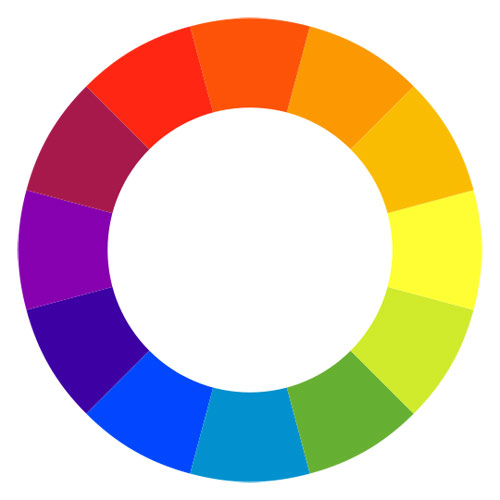
Take a close look at Matisse's painting The Dance, shown above. What is it about this painting that makes it "pop"? The dancers seem like they're almost floating on top of the background. Why is that? Matisse was a master colorist, so he chose his colors carefully. He knew that when orange and blue are placed next to each other, they each appear brighter and more intense. Here's why: Orange and blue are complementary colors. Complementary colors have a special relationship because they are opposites on the color wheel. Take a look at the color wheel below:


You'll notice that yellow and blue are also complementary colors. Red and green make up another complementary pair. When complementary colors are placed next to each other in a painting or drawing, the artwork seems to vibrate. Complementary pairs can make an artwork more eye-catching and dynamic. For this reasons, many artists (like Matisse) make the conscious choice to use complementary colors in their compositions. If you look closely at the color wheel, you'll notice that the complement of each primary color is the combination of the other two primary colors. This means that:
  • Yellow + Red = Orange, which is the complement of Blue.
  • Red + Blue = Purple, which is the complement of Yellow.
  • Blue + Yellow = Green, which is the complement of Red.
When you examine these colors on the color wheel, you can see how they are related. You will also note that the complements of the primary colors (red, yellow and blue) are all secondary colors (green, purple and orange). The next time you make art, keep the complementary colors in mind to see if you can make your painting more dynamic.
Segmation

FREE Newsletter

Join us on Facebook SegPlay® Mobile iTunes now available for iPhone and iPad

www.segmation.com

Tuesday, April 19, 2011

3 Ways that Artists Can Benefit from Blogging


Free Trial Downloads for Segmation SegPlay® PC (see more details here)

Before the invention of photography, artists had to work from real life. How did that affect artists' working habits?

The necessity of working from life meant that in order to paint a portrait, the sitter had to pose for hours, days, weeks, and sometimes months before the artist was finished. To paint a still life, the artist would have to make sure the set-up stayed the same day after day, and could only paint when the lighting conditions were the same as the previous day. For landscape painting, artists would have to finish as much as possible on-site and often complete the final painting in their studio, often surrounded by smaller studies that contained notes on which hues and values to place where.

The invention of photography – especially digital photography – has changed the way artists work. Thanks to the convenience of affordable digital cameras, artists can easily take a variety of high-quality pictures of whatever they want to paint, and then instead of working from real li

The main goal of art marketing is to get your art out there. The more people that know about you and your work, the better. Blogging is an excellent – and free - way to put you and your art in front of a wider audience. In this article we'll take a look at how artists like you can benefit from keeping a blog.

What is a blog?


"Blog" is short for weblog – a word that was first coined in 1997 when the general public was still getting its feet wet with the Internet. At first, blogs were merely online diaries – personal accounts of people's daily lives. As the Internet has matured, blogs have turned into so much more. Blogs are now powerful marketing tools that are used by corporations and individuals alike to promote their businesses.

How can blogging be used as an effective art marketing tool?


  1. Blogs provide exposure. The search engines love frequent-updated blogs. Each update you post gives you another chance to be found on the Internet – by a gallery owner, a potential collector, or anyone who might be of benefit to you and your business in some form.


  2. Blogs provide insight. When you blog about your art, you can write about everything from your inspirations to your struggles and everything in between. Blogs give gallery owners and potential collectors insight into your working process, which shows them that you are a serious artist.


  3. Blogs facilitate connections. People who buy artwork online are more willing to purchase art from someone with whom they feel a connection. Blogging allows you to connect with your fans and collectors on a personal level – showing them that you are a real, live, trustworthy human being, as opposed to an impersonal collection of pixels on the screen.


These are just some of the many ways that artists can benefit from blogging.

One final note: remember that a blog is better as a supplement to your website, and not a substitute. While some artist blogs double as an online gallery and a blog, it is generally better to keep the two separate, so that it is easier for your site visitors to navigate from your new content in your blog to your static content on your website (such as your gallery).

Ready to set up your art blog? You can start a blog for free through Wordpress or Blogger. Have fun!

Segmation

FREE Newsletter

Join us on Facebook

SegPlay® Mobile iTunes now available for iPhone and iTouch

www.segmation.com

Thursday, January 27, 2011

United States President Caricature Art by www.segmation.com!

United States President Caricature by Segmation


United States President Caricature by Segmation

United States President Caricature Pattern Set for SegPlay® PC by Segmation (see more details here)

Here's a fun and easy set of United States President Caricature patterns (thanks to our friends at Graphics Factory for providing this content) The set includes 17 nicely done portraits of the more familiar presidents including George Washington, Abraham Lincoln, Franklin Delano Roosevelt, Dwight D. Eisenhower, John F. Kennedy, Lyndon B. Johnson, Richard M. Nixon, Jimmy Carter, Ronald Reagan, Bill Clinton, and George W. Bush.

When these patterns are completely colored, the resulting image has a very strong resemblance to the original artwork. These vibrant and colorful pieces of art are truly engaging and exciting for you to paint, and especially a joy to look at when completed.

With over 2800 available patterns from an ever growing collection of artistic themes, SegPlay® PC will provide you with hours upon hours of painting fun and entertainment. SegPlay® PC Splash Screen With SegPlay® PC as an Art Appreciation teaching tool, students can memorize famous works of art, color by color. Children can truly touch images related to a wide assortment of subjects. As a parent or educator, the learning possibilities stretch as far as your image-ination!

SegPlay® PC is in the computer software category known as "casual gaming". While it provides a pleasurable and creative escape from mundane computer activities, the program is simple to use and new players can begin the painting function immediately, with just a few, intuitive tools. However, the program also offers rich features with challenging and engaging options, so it expands with each user, whether they seek an education in art appreciation or just want to enjoy a creative gaming challenge.

With a dynamic and clear user interface and fun sound effects, the program's gaming features compliment the artistic benefits and engage users at all levels. For a gaming challenge, users can race against a timer to complete patterns in a given timeframe at levels from Easy to Experienced and Expert. Users can also employ speed-painting tools, monitor the mistake counter, and track the number of remaining pieces and colors to increase the program's challenging and addictive potential.

United States President Caricature

Have fun and relax with beautiful online painting art. So fun and easy to use with no mess but just a mouse!

Be a Artist in 2 minutes with United States President Caricature from Segmation SegPlay® PC (see more details here)

Segmation

FREE Newsletter

Join us on Facebook

SegPlay® Mobile iTunes now available for iPhone and iTouch

www.segmation.com

Be my Valentine by www.segmation.com

SegPlayPC_VALBanner.jpg

You'll find in our SegPlayPC Be My Valentine pattern collection. This is a fun, off-beat set of great colorful digital patterns. We know you'll enjoy coloring these great patterns! What a great stress reliever as well.

Gorgeous art painting patterns to color and relax with. You don't have to be a professional artist to enjoy this. Join the fun today! Segmation.com

Valentine's Day is celebrated around the world on February 14th. It’s a magical day where lovers express their love for one another in many traditional and untraditional ways. In today's time, candy, chocolates, flowers, and heart filled cards are usually given as gifts in many cultures around the globe. Our set of Valentine themed patterns includes many illustrated graphics of the holiday including roses, candy, cupids with arrows, dragons and puppies in love, and couples in love. Happy Valentine's Day to all!
This set contains 24 paintable patterns.

You can find a wide collection of Be my Valentine Scenes paint by number patterns and is available at the Segmation web site. These patterns may be viewed, painted, and printed using SegPlay™PC a fun, computerized paint-by-numbers program for Windows 7, 2000, XP, and Vista. Enjoy!

SegPlayPC_VALthumbstrip.jpg

Segmation

FREE Newsletter

Join us on Facebook

SegPlay® Mobile iTunes now available for iPhone and iTouch

www.segmation.com

The Benefits of Making Your Own Paints


Did you know that you can easily and affordably make your own paints right at home? The supplies needed to make oil paints, acrylics, watercolors or pastels are fairly inexpensive and they can be easily purchased online or at a local shop. You don't need a giant studio or an excessive amount of supplies to make your own paints - all you need are a few basic ingredients pertinent to each medium, and a tabletop that you can use as your work area.

You might wonder, "Why should I bother making my own paints?"

There are a number of reasons why it is beneficial for artists to make their own paints. For starters, when you break down a specific medium to its individual components, it helps you to understand the nature of the medium. Taking part in the process of creating an oil paint or a pastel stick provides invaluable insight into the qualities of that particular medium. Plus, the magic of watching loose powdered pigment transform into a usable paint can become part of the overall creative experience.

One of the best things about making your own paints is that you can control the hue, value and intensity of each color. If you need a specific shade of green that is difficult to mix using commercial paints, you can create your own. If you need a range of blues to create skyscapes and seascapes, you can create the exact colors that you need and save them for future use.

It's easy to forget that there was once a time when all artists either had to make their own paints or purchase these supplies from a local artisan. The vast majority of artists today buy their paints and art materials off the shelf. Most artists don't even think twice about how these materials are made or what is actually in them. This has changed our relationships to our art materials. By making your own paints, you can reinvigorate your connection to the materials that you use to create art.

In future articles, we'll take a closer look at the process involved for making oil paints, pastels, watercolors and acrylics.

Segmation

FREE Newsletter

Join us on Facebook

SegPlay® Mobile iTunes now available for iPhone and iTouch

www.segmation.com

How to Make Your Own Oil Paints


In a previous blog post, we discussed the benefits of making your own paints, rather than buying commercially-made paints from art supply stores. Two of the most appealing reasons for making your own paints include the ability to control the color and the quantity of the paint that you make. In today’s blog post, we’ll take a more in-depth look at how you can make your own oil paints using just a few simple supplies.

The two main ingredients you’ll need for making your own oil paints are powdered pigment and an oil, such as linseed oil (which most oil painters usually have on hand anyway). The tools you’ll need to mix the ingredients can either be a mortar and pestle (shown above), or a sturdy spatula and a flat glass surface. The mortar and pestle is the preferred choice because it will allow you to grind the pigment into finer particles.

To make your own oil paint, place your desired amount of pigment onto the glass surface or into the mortar. Add a small amount of oil and grind together the pigment and the oil using your pestle or spatula. Be sure to start off with a small amount of oil, because you don’t want your mixture to be too runny.

As the pigment absorbs the oil, note the consistency. If the mixture looks too dry, add more oil. If it is too oily, add more pigment. Your goal is to create a mixture that resembles the consistency of toothpaste.

Once the pigment and oil are thoroughly mixed, then you are ready to paint! The process is as simple as that. Your homemade oil paint can be mixed with commercially-made oil paints, and it may be stored in tubes or airtight jars for future use. segmation dot com.

Segmation

FREE Newsletter

Join us on Facebook

SegPlay® Mobile iTunes now available for iPhone and iTouch

www.segmation.com

Thursday, January 20, 2011

Selling your art at outdoor art fairs


Have you ever considered selling your artwork at an art fair? Outdoor art festivals are a popular way of uniting artists with potential collectors and even gallery owners. At the larger art festivals, attendance can reach 250,000 and higher, which means a lot of eyeballs will have the chance to view your art! If that wasn't enough to convince you, keep in mind that there are visual artists who report 6-figure annual incomes from selling their art at street festivals around the US.

Before you start applying to art festivals, do your research to find out which art fairs are best for you. Some art fairs are well-known and highly-regarded, while others are smaller and don't generate as much foot traffic. When researching which art fairs to apply for, find out the answers to the following questions:

  • How many people attend the art fair each year?

  • Will any cash prizes be given, and if so, how many prizes and for what amounts?

  • What is the booth fee?

  • Does the art festival expect to collect a percentage of your sales?

  • What is the location of the art fair? Similarly, how far will you have to drive? Will you have to stay in a hotel? What are the costs for this - and is it worth it, given the answers to the previous questions?

  • Are you allowed to sell prints and cards of your work, or only originals? (Not all art festivals allow artists to sell reproductions of their work, but if they do, it's a great way to boost your income and also spread your artwork further afield.)


The answers to these questions will help you decide which art festivals are worth your time, and which ones you can skip.

All in all, selling your art at art festivals is an excellent way to take your art career into your own hands. You can make connections with other artists, network with gallery owners and reach out to the general public. Rather than wait for a gallery to take on your work, you can take your art out into the world!

Thursday, December 30, 2010

ChromaBlend Art by www.segmation.com!

ChromaBlend by Segmation


ChromaBlend by Segmation

ChromaBlend Pattern Set for SegPlay® PC by Segmation (see more details here)

Longtime Segmation SegPlay™ contributor, Susan Richardson, has created an exciting set of multi-colored images for us to use with SegPlayPC™ These chromatic patterns are a joy to look at and utilize a vivid color palette. Have some psychedelic fun with the ChromaBlend collection! Cascade, Confusion, Eyes in the Round, Expand, Fractured Rainbow, It’s Raining, Neon Impression, Organza II , Marbled, Orange, Purple, Pink and Blue, Rainbow II, Stirring of the Water, Spring Through My Window, Square Circle I, Surreal Dream, The Blues, 3D IV and Wave collections are included.
This set contains 20 paintable patterns.
ChromaBlend

Have fun and relax with beautiful online painting art. So fun and easy to use with no mess but just a mouse!

Be a Artist in 2 minutes with ChromaBlend from Segmation SegPlay® PC (see more details here)

Segmation

FREE Newsletter

Join us on Facebook

SegPlay® Mobile iTunes now available for iPhone and iTouch

www.segmation.com